SANCTUARY OF SANTA MARIA DI COSTANTINOPOLI
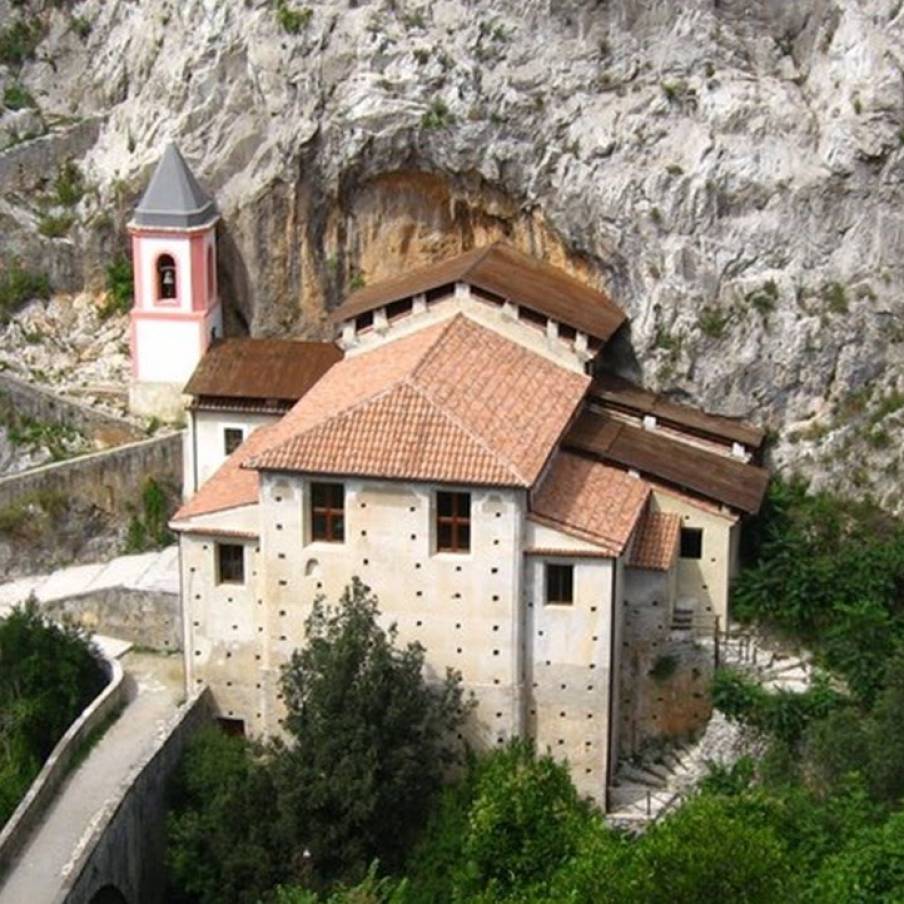
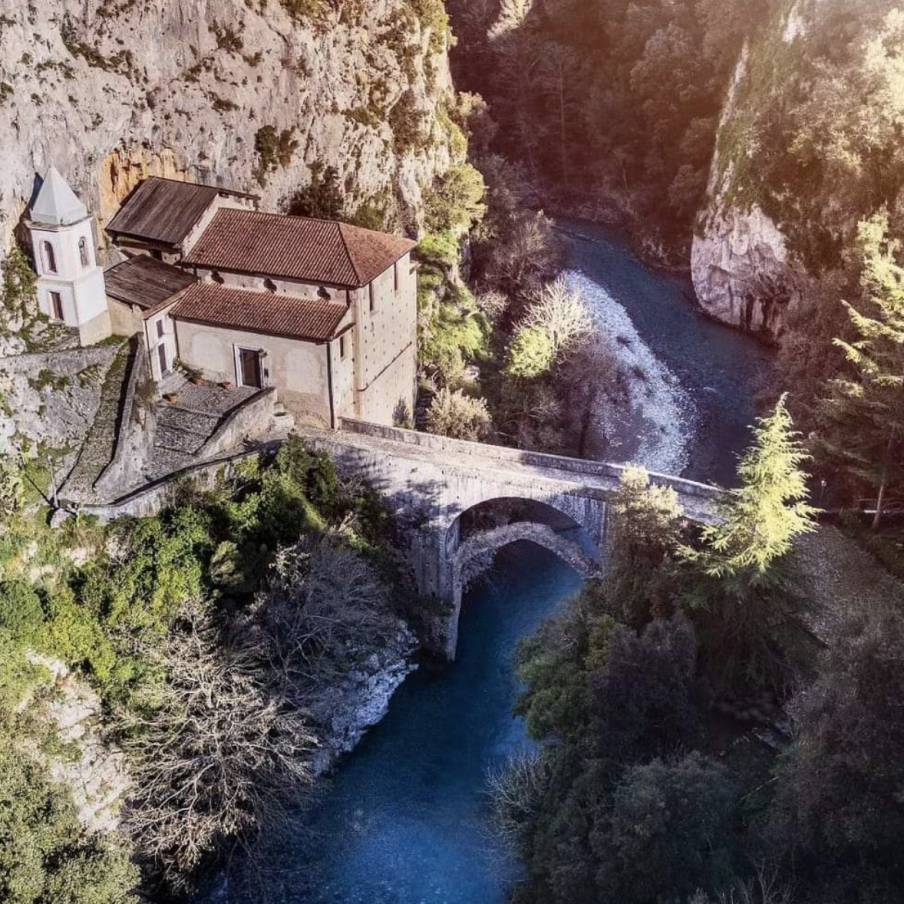
Cave church on the right riverside of the Lao, originally a late medieval "chapel," which took its present appearance between the second half of the 1600s and the early 1900s. With a Greek-cross plan, it has three naves marked by round arches. The patronal feast of the named after Madonna was introduced in 1679, in thanksgiving for her intercession at the time of the plague of 1656. Since 2002 the church has the status of diocesan shrine.
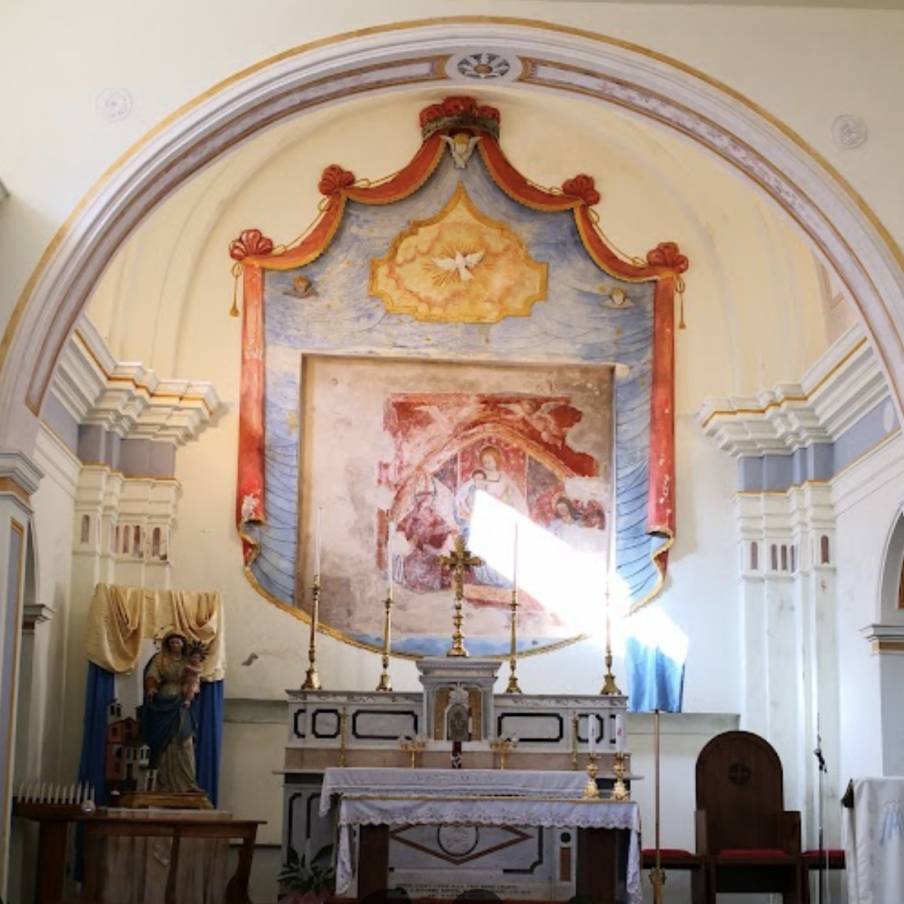
Inside, on the central wall, stands out a large fresco by unknown artists, painted in various stages starting from the 17th century. It depicts the Madonna enthroned with the Child above whose head linger two crown-holding angels; on their right, a genuflected bishop (a metaphor of the triumphant post-Tridentine Church); on the left, the archangel Michael piercing the devil covered in flames (a symbol of the plague and Protestant heresy). The representation is surrounded by voluminous drapery alluding to the Virgin's protective mantle.
(Edited by Xavier Napolitano)