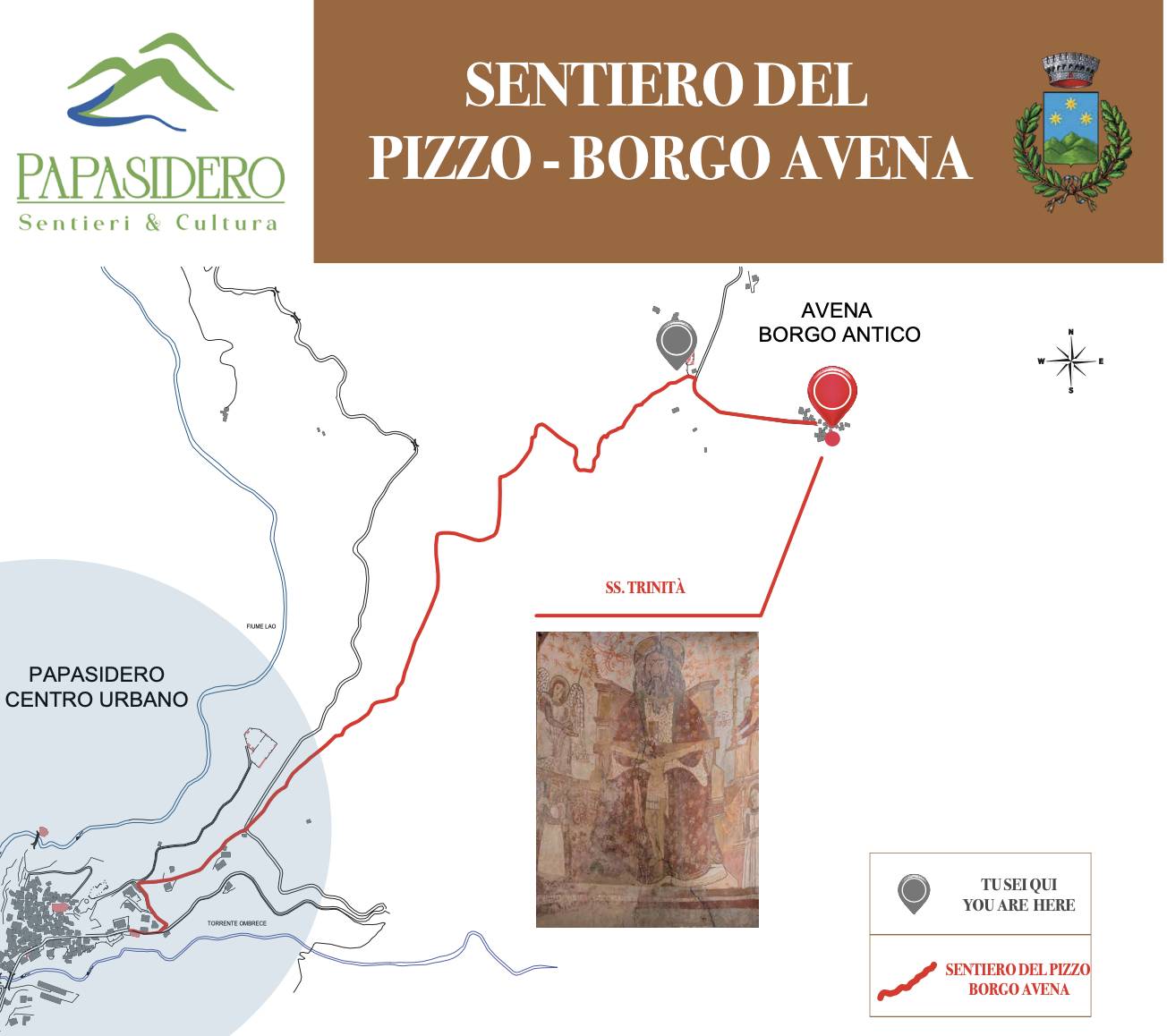
CHURCH OF THE SS TRINITY OF AVENA
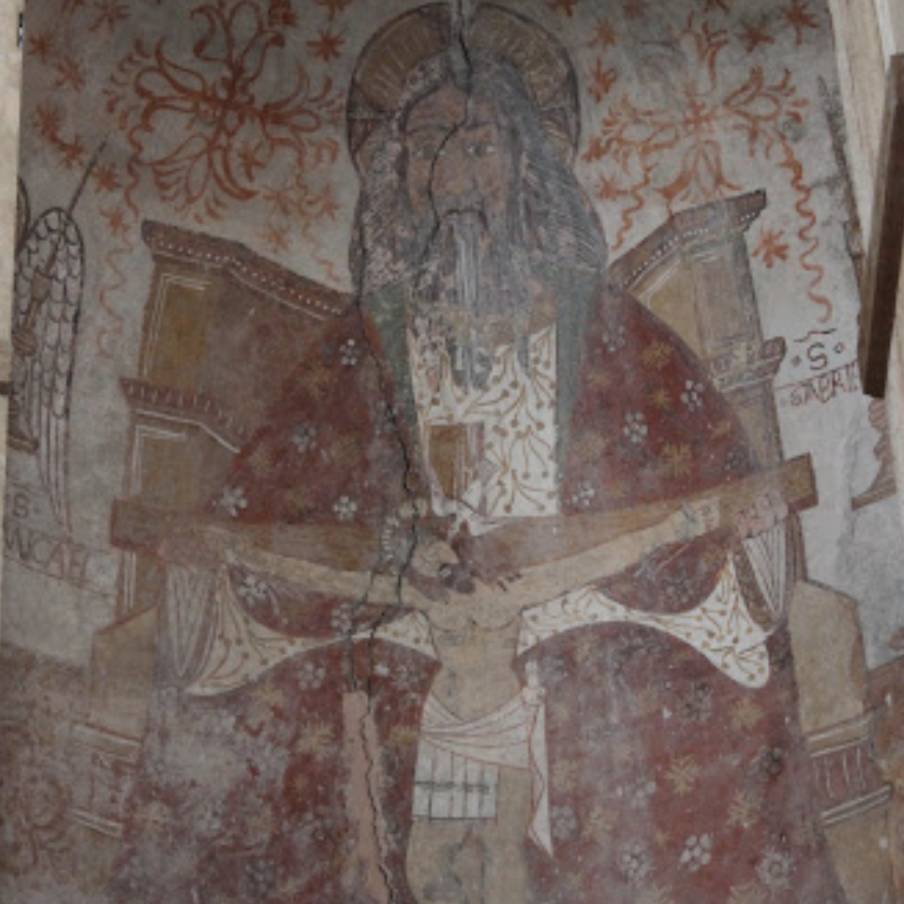
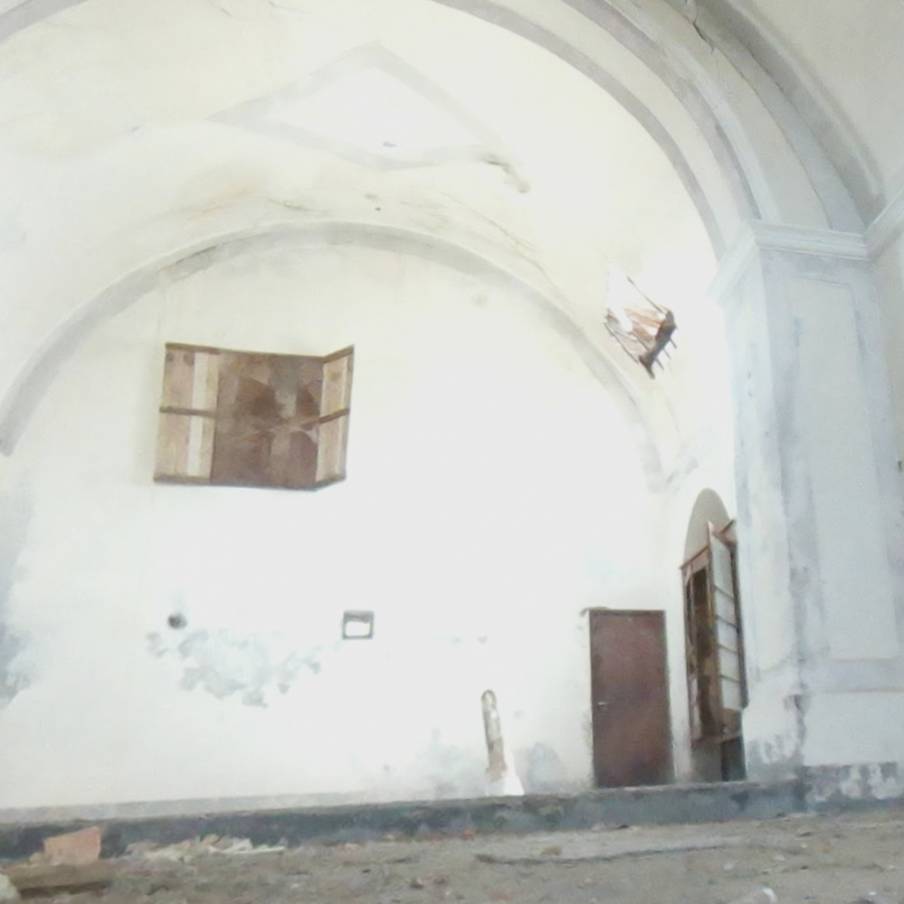
Raised with a single nave, it was originally an integral part of a Basilian monastery of the same name. In 1510 it was elevated to parish status. The fresco inside depicts the Trinity, with God Father in the center holding the crucified Christ, surrounded above by the archangels Michael, Gabriel, Raphael, and Uriel. The painting was executed in 1521 and commissioned by Rinaldo Grisolia, who had provided for the reconstruction of the building damaged by a landslide or a
earthquake.
The extraordinariness of the fresco lies in the archangel Gabriel portrayed with a brown face and disc-shaped halo. This suggests the commissioner's membership to the Trinitarian order, dedicated to the ransom of Christians enslaved by the Turkish-Barbarians. A task made complex and delicate because of the dialogue started and concluded with the Islamists, and which could be successful thanks to the mediator's talents. The Moorish semblance of the archangel Gabriel must have meant,
for Grisolia, that God, through him, in all successfully resolved cases had announced to the Muslims his willingness to release the slave under negotiation. Gabriel, in fact, is recognized not only by Christian theology as the angel-announcer to Mary of the motherhood of Christ, but also by the Islamic religion, having appeared in a dream to Muhammad foretelling him of the writing of the Qur’an.
(Edited by Xavier Napolitano)