CHAPEL OF ST. ANNA AT THE CEMETERY
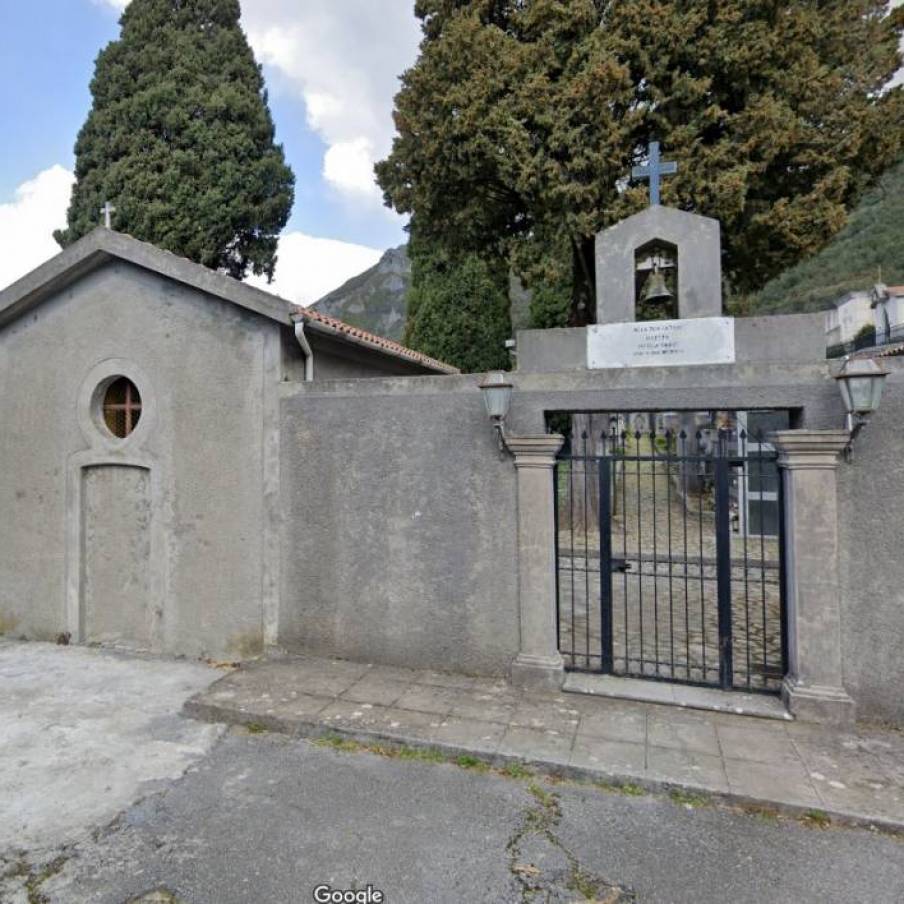
Set up as a square hall presumably between the seventeenth and eighteenth centuries, it is not excluded that it was originally dedicated to St. John and accorsed on his feast day (June 24) for auspicious rites to parturients and lustral rites to infants with survival difficulties, carried out in the crypt revealed by the restorations of the 1980s after the expansion of the cemetery. The fresco preserved there, inscribed in a lunette, was revealed in its wholeness in the course of the mentioned works.
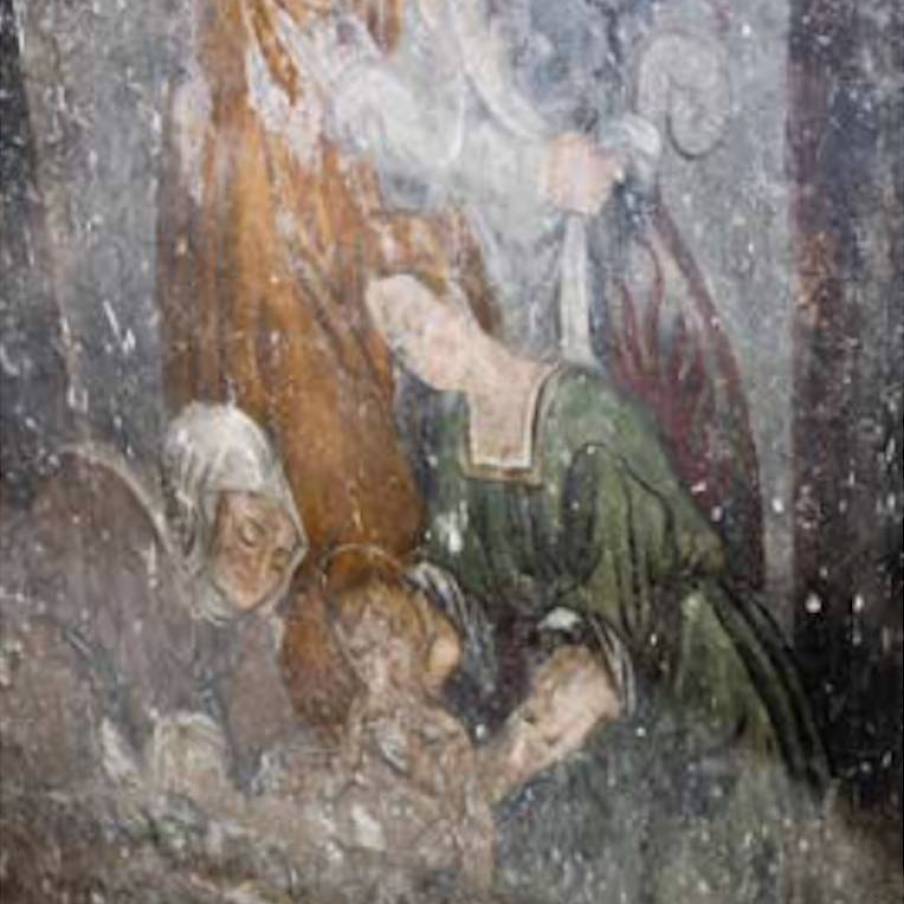
Proposing the iconographic canon of the birth of the Baptist, it shows a woman who has just given birth, flanked by the midwife bending over the lifeless-looking infant whom she immerses in a basin of water, while two other standing women wait to dry him. At the bottom is the year of execution - 1705 - changed to 1905 to make it coincide with the year the cemetery was built, when the crypt was buried by covering the lower half of the fresco to erase the memory of the lustral rites.
The upper half was spared with the woman on the bed recognized as St. Anne, traditionally invoked by the dying, therefore naming the small church after her in order to make the painting congruent with the cemetery area.
(Edited by Xavier Napolitano)